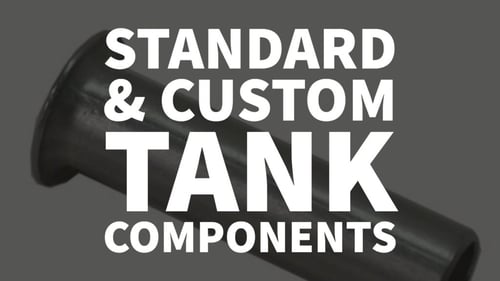
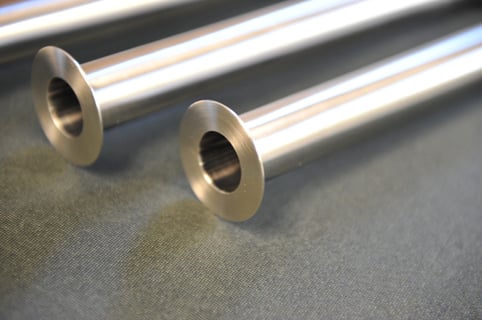
The short answer is “Yes!” but we’ll give you the long one anyway. For years, customers have relied on HPS to fabricate a wide variety of standard and custom tank components for their facilities. Not only has our team been able to solve issues with customer’s existing tank components — such as alignment, lack of steam coverage, and foaming — but we’ve also been able to provide extremely fast lead times and cost-competitive solutions.
 We’ve all had an experience where we desperately needed a part, only to call the supplier and be told that it would take several weeks or months to replace. Recognizing the urgency of these situations and the importance of prioritizing our customers’ needs, HPS always keeps a crew available for jobs that demand immediate turnaround. This, in turn, allows our customers to get back to work as soon as possible.
Need Sanitary Dip Tubes? Reach out to Our Sales Team Today
In addition to the time crunch and high-efficiency demands of the industry, customers frequently experience a number of other challenges when trying to order or modify their tank components. For example, they may not have access to 3D drawings, accurate dimensions, or a partner who is knowledgeable about customer needs and material in addition to fabrication options.
What to look for in a dip tube manufacturer
All of these things are essential to a successful tank component replacement job. Customers seeking a fabricator for this type of work should look for:
 Someone with a team of ASME Section IX-certified welders.
- A dedicated fabrication facility for stainless steel.
- A proven track record of dimensional accuracy and meeting exact specifications.
Too often we see contractors commit to performing on-site installations despite lacking the expertise to actually complete them. In the end, it’s the customer who suffers, receiving parts filled with inadequate welds that can delay projects for months trying to get them up to FDA requirements and disrupting other production schedules.
The HPS Difference
At HPS, our team truly blurs the line between a construction contractor and a supplier/manufacturer of custom parts, offering expert-level fabrications and part modifications in our shop and Class 100 cleanroom, as well as complete on-site installations of process piping systems. We can take existing components and duplicate them to match exact specifications, as well as build completely custom components based on a customer’s needs.
Our tank component experience specifically includes:
- Dip tubes
- J tubes
- Spray balls
- Spray wands
- Inlet tubes
- Feed tubes
- No foam assemblies
In each of these instances, we have modified existing components, made them out of more corrosion-resistant materials like Hastelloy C22, Inconel, and titanium and provided prototypes to our customers for testing. Many times, we refinish a customer’s existing components and mechanically polish, electropolish, and passivate the parts back to their original condition.
In addition to these fabrications, modifications, and secondary finishing services, our team provides all the necessary documentation for the job, including:
- MTRs
- Full FDA documentation package
- Polishing certifications
- Passivation certifications
Once complete, the tubes can be easily and safely packaged and shipped anywhere that UPS or FedEx delivers. Alternatively, we can send a field service team to install them directly in the customer’s facility. If you need a newly fabricated or modified tank component, and you need it fast, give us a call.
To connect with a team member about our tank component capabilities, contact HPS today.
Minimize construction risks with off-site piping fabrication
Reduce risk, lower cost and guarantee the highest quality work with off-site piping fabrication.
.jpg?width=900&name=2011-11-08-13.50.52-1-1400x1050%20(1).jpg)